

News & Insights
You heard it here first. Stay up-to-date on game-changing insights in pro AV, wayfinding, and digital and static signage. Plus, discover the latest news and announcements from Blue Rhine Industries.
October 26, 2026
Experiential AV Design: From Concept to Commissioning
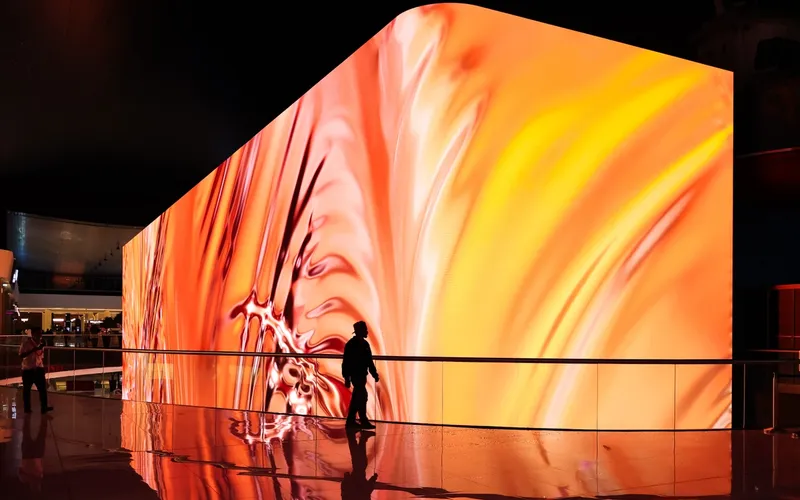
Standard designations verified September 2026 against AVIXA's published standards catalogue. Designations change, several widely-cited numbers are already superseded. The short version Experiential AV projects fail in predictable places: a display sized by eye rather than by viewing geometry, a rack built without a plan, a system handed over with no agreed definition of "working", and a support contract written after the client has already lost confidence. Most of those failures are process failures, and the industry has published standards covering the process, not just the kit. This is a breakdown of the phases, mapped to the standards that govern each one. First, the standards worth knowing AVIXA maintains the AV industry's standards catalogue. Each standard below was confirmed on AVIXA's own published-standards page with its current designation, and each is explained where it applies in the phases that follow. Phase 1, Discovery and concept The question this phase answers is not "what shall we install" but "what is the audience supposed to experience, and how will we know it worked." Experiential work differs from corporate AV here. A boardroom has a known task, see the far end, hear the far end, share content. A brand experience, visitor centre or attraction has a narrative goal, and the AV exists to serve it. Content intent should precede the equipment schedule, because content determines aspect ratio, brightness, sightlines and dwell time, and those determine the kit. Outputs worth insisting on: a written experience narrative, a spatial plan showing where audiences stand and move, the environmental constraints (ambient light, acoustics, ceiling access, power, heat), and the operational reality, who turns it on, who fixes it, how many hours a day it runs. That last group is where experiential projects quietly go wrong. A system designed for eight hours a day and run for sixteen will not reach its expected service life. Phase 2, Design and system engineering This is where the published standards start doing real work, because the design decisions they govern are the ones most often made by eye. Display sizing is the clearest example. V202.01:2026 exists precisely because "it looked fine in the showroom" is not a method. It establishes display size against viewing positions, works from drawings or on site, and has a free conformance calculator. For LED walls the stakes are higher than for projection, because the wall is usually structural, expensive and impossible to resize after install. Contrast follows from ambient light, and V201.01:2021 defines image system contrast ratio and its measurement. Experiential spaces are frequently daylit or deliberately lit for atmosphere, which is exactly the condition where a display specified on datasheet contrast disappoints. Audio coverage across an open experiential space is harder than in a room with seats. A102.01:2022 characterises coverage of defined listener areas, A103.01:2023 addresses spectral balance for design and commissioning, and A104.01:2025 covers required SPL and signal-to-noise by venue type. The consultancy question to settle in this phase: are you specifying these standards contractually, or referencing them aspirationally? The difference determines whether you have grounds to reject an installation later. Network architecture belongs in the design conversation too. Modern experiential systems increasingly put video, audio, control and monitoring onto the network, which means AV and IT decisions can no longer be made separately. Who owns the network, how devices are segmented and secured, and how the system will be monitored should be agreed before integration starts, not discovered on site. Phase 3, Documentation D401.01:2023 covers this and is the standard most often skipped. Its framework addresses documentation requirements, who is responsible for creating each item, and tracking delivery. The practical value is the second and third parts. Most documentation disputes are not about what a drawing should contain but about who owed it and whether it arrived. Agreeing the responsibility matrix at design stage costs an afternoon; resolving it at handover costs weeks. Phase 4, Integration and build Two standards govern the parts of integration that determine whether the system can be maintained. F502.02:2020 (R2023) sets minimum rack planning and design requirements, including process inputs and outputs. A rack built without a plan works on day one and becomes unserviceable by year three. F501.01:2015 defines cable labelling requirements explicitly to aid operation, support, maintenance and troubleshooting. Labeling is the cheapest thing in the project and the first thing dropped under schedule pressure. It is also what determines whether a fault takes twenty minutes or a day to trace, which makes it a direct input to the remote diagnostics discussion below. Phase 5, Commissioning and verification D402.02:2013 (R2024) is the standard that matters most and is invoked least. Its framework covers determining the elements of an AV system, the timing of verification, a process for determining verification criteria and metrics, and reporting procedures. Read that list again in project terms. It says verification criteria should be determined, which means agreed, in advance, in writing. The common failure is a project where "commissioning" means the integrator demonstrating that things switch on, and the client discovering only later that they had a different definition of acceptable. Set the metrics at design stage, not at handover. If the audio coverage target, the contrast ratio target and the image size conformance were written into the design documentation, commissioning becomes a measurement exercise. If they were not, it becomes a negotiation. If the metrics are agreed at design stage, commissioning is measurement. If they aren’t, commissioning is negotiation. Phase 6, Handover, support and remote diagnostics Experiential installations are unattended for most of their lives. The operator is a duty manager, not an AV engineer. This is why remote monitoring has moved from a value-add to a core design input. Designing for it means decisions made in earlier phases: devices selected for network manageability, a management VLAN provisioned, power sequencing controllable remotely, and labelling accurate enough that a remote diagnosis can be acted on by whoever is physically present. What can reasonably be monitored includes device reachability and uptime, lamp or laser hours and projector or display health, signal presence, temperature and fan status, and error logs. What cannot be monitored remotely is whether the experience is actually good, audiences still need human observation. S601.01:2021 addresses ongoing power-consumption management of AV systems, which belongs in this phase: a 24/7 LED wall is a significant recurring energy cost, and scheduling is a design decision rather than an operational afterthought. LED video walls: what to settle early Judgment rather than standards, with one exception noted. Pixel pitch starts with viewing distance, but content matters too. Fine text, detailed imagery and camera-facing installations place different demands on an LED wall than large-format motion graphics. The point is to define the viewing conditions first and select the technology second, not the other way around. Pitch is also the decision that cannot be revisited after install, which is why V202.01:2026 and its conformance calculator belong in the design phase rather than the procurement phase. Structure, access and heat are the real constraints. An LED wall is a building element. Ask early where the service access is, what the wall weighs, how heat leaves the cavity, and whether a failed module can be replaced from the front or requires rear access, that single answer changes the structural design. Spares are part of the specification. Module-level failure is normal over a wall's life. A spares package and a documented replacement procedure should be in the contract, not requested after the first failure. Content specification is part of AV specification. Resolution, aspect ratio, frame rate and the content management workflow should be agreed with whoever will produce content for the life of the installation, not just for launch. What to ask an AV consultancy Which standards are you specifying to, and are they contractual or referenced? Who owns the documentation deliverables, and what is the delivery schedule? What are the verification criteria, and when were they agreed? What is the remote diagnostics architecture, and what does it actually report? What is the spares strategy and expected module failure rate? What is the projected annual energy cost at the operating hours we have specified? A consultancy that answers the third and sixth without hesitation is a consultancy that has commissioned systems before. Sources 1 AVIXA, Available Standards catalogue Current designations and AVIXA's own scope descriptions for D401.01:2023, D402.02:2013 (R2024), V202.01:2026, V201.01:2021, A102.01:2022, A103.01:2023, A104.01:2025, F502.02:2020 (R2023), F501.01:2015, S601.01:2021, TR-111:2019, UX 701.01 (in development); former INFOCOMM designations; USD 75 pricing and member access; existence of a free DISCAS conformance calculator avixa.org/resources/standards/published-standards 2 AVIXA, Standards overview AVIXA's role as the AV standards body; standards developed by subject-matter experts as recommended practices avixa.org/resources/standards
Read Article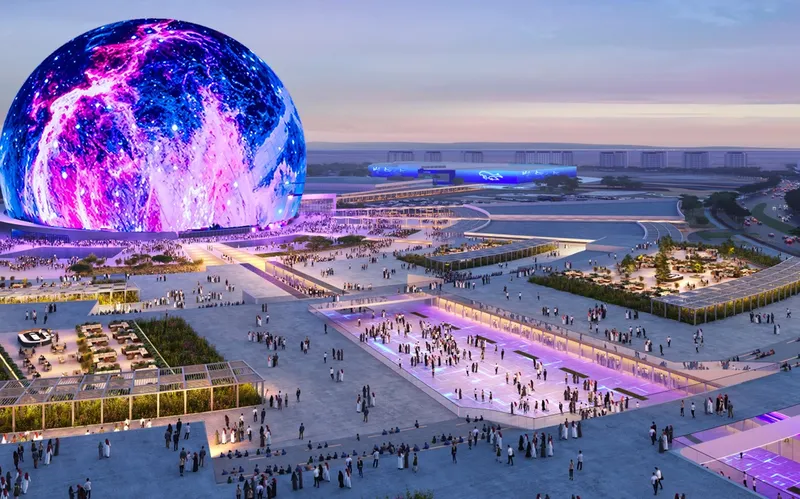
October 19, 2026
Blue Rhine Industries wins Exosphere subcontract for Sphere Abu Dhabi’s $1.7bn construction
Dubai, United Arab Emirates — UAE-based pro AV and digital signage specialist Blue Rhine Industries (BRI) has been awarded the contract to install the LED screens that make up Sphere Abu Dhabi’s immense Exosphere. The Exosphere is Sphere Abu Dhabi’s fully programmable exterior display, transforming the building’s outer surface into an unmissable digital canvas for art, entertainment and visual storytelling. This AV integration project is the company’s largest scope to date in its 20-year history. BRI was selected by ALEC Engineering and Contracting, part of ALEC Holdings, to install and commission the iconicExosphere, an integral part of the main construction contract for Sphere Abu Dhabi, which is worth US$1.7 billion. The Department of Culture and Tourism – Abu Dhabi (DCT Abu Dhabi) is leading the development of the first Sphere venue outside the United States. Scheduled for completion in 2029, Sphere Abu Dhabi will bring the innovative Las Vegas concept to the UAE capital. The 20,000-capacity venue is set to become a major new attraction on Yas Island, hosting immersive concerts, sporting events and exhibitions to captivate UAE residents and international visitors alike. An entertainment experience inside and out Sphere Abu Dhabi’s monumental Exosphere will become a defining feature of the Yas Island skyline and be visible from key vantage points across Abu Dhabi. It will delight audiences outside the venue to complement the multi-sensory entertainment taking place inside. The fully programmable LED Exosphere wraps around the 112-metre-high building, turning its exterior into a phenomenal digital display capable of broadcasting a wide range of dynamic content. Alongside entertainment, the Exosphere is expected to showcase work from Emirati artists, creating a major new platform for celebrating local creative talent and chronicling the UAE’s story through innovative art and technology. John V. Joseph, CEO of Blue Rhine Industries, said: “As a UAE-founded company, we are proud to be bringing the Sphere Abu Dhabi Exosphere to life by installing the LEDs across the 112-metre-high exterior facade. It is an incredible milestone for our team to partner with ALEC Holdings to support DCT Abu Dhabi in delivering this landmark entertainment destination to the UAE. “Sphere Abu Dhabi is one of the most ambitious entertainment and AV projects being developed anywhere in the world. We have grown alongside this region for more than two decades and our team is honoured to be trusted to contribute to a project of this significance. “Projects of this scale demand specialist AV knowledge, technical precision and the ability to integrate complex technology within equally complex built environments. BRI has demonstrated these capabilities consistently across 20 years of delivering major AV and digital signage projects across the Middle East.” Homegrown UAE brand driving the nation’s innovative visual projects Founded in the UAE in 2006, Blue Rhine Industries has grown from its roots in traditional signage manufacturing into the region’s leading professional AV integration, digital signage and wayfinding specialist. Its portfolio includes the 440-metre-long curved digital screen at Dubai Fountain during 2025’s renovation works; the 70-metre wide by 14-metre-tall LED installation at Dubai Aquarium & Underwater Zoo at The Dubai Mall; and integrated AV, digital signage, and background audio systems for Zayed International Airport, Abu Dhabi. BRI delivers projects end-to-end, with capabilities spanning AV system design and engineering, manufacturing, integration, installation, commissioning and ongoing maintenance and support. The Sphere Abu Dhabi award builds on that experience, as BRI expands its role in delivering increasingly ambitious experiential AV and large-scale digital installations across the GCC and wider region. About Blue Rhine Industries Blue Rhine Industries (BRI) is a UAE-headquartered audiovisual, digital signage and wayfinding specialist with more than two decades of experience delivering complex projects across the GCC and wider Middle East. Founded in Dubai, UAE in 2006, BRI provides end-to-end capabilities for AV integration, digital signage and wayfinding signage, from manufacturing and installation to ongoing maintenance and support. The company now has five production hubs spanning more than 200,000 sq ft across the UAE and Saudi Arabia and more than 750 employees. BRI works with the region’s leading developers, contractors, consultants and brands, including Emaar, Nakheel and ALEC, across leisure and entertainment, retail, hospitality, transport and travel, public realm and other large-scale environments. Please send all media enquiries to marketingexecutive@brisigns.com.
Read Article
October 12, 2026
Celebrating International Podcast Day: Conversations That Inspire on Rhine & Shine
To mark the recent International Podcast Day, we're celebrating the inspirational guests who have joined us on Rhine & Shine, the official Blue Rhine Industries podcast examining the business strategies, ideas and trends shaping the built environment. We've welcomed industry experts and thought leaders from some of the Middle East's leading organisations. From digital signage and smart wayfinding to retail innovation and beyond, our conversations reveal how technology can transform spaces into meaningful human experiences. Here are some of our highlights. Retail Media Networks in the Middle East: Data, Digital Signage & the Buyer Journey Retail media is changing how brands connect with shoppers, but what actually makes a message relevant at the moment it matters? Charlotte Davis joined us to unpack the opportunities emerging across the Middle East's retail media landscape. We look at how audience insights, hyper-personalisation and in-store technology can help retailers move beyond generic advertising towards targeted customer experiences. Plus, discover how digital signage in retail environments can connect content with customer behaviour to influence their decision-making throughout the buyer journey. The Digital Signage Boom in the GCC: Homegrown Innovation The Middle East has a reputation for bold, technology-led experiences. So, what's leading this "wow factor" appetite? Florian Rotberg, Founder and Owner of Invidis Consulting, joins Blue Rhine Industries' Director of Strategy, Nita Odedra, to discuss the GCC's growing influence on the global digital signage landscape. From ambitious destination developments to international brands establishing a regional presence, they examine how a culture of experimentation is accelerating investment in digital signage and DOOH technology, creating new opportunities for brands to engage audiences. The End of the GPS Era: What Comes Next? When was the last time you reached your destination without checking your phone? GPS has made navigation easier, but it has also changed the way we understand our surroundings. This episode examines the relationship between technology, spatial awareness and user experience, and why ambient navigation could offer a less distracting alternative to an app. We also consider how intuitive digital guidance and physical wayfinding can work together to make navigating complex spaces feel effortless. "Be You": An Empowering Journey of Maitha Alblooshi Success looks different for everyone. So how do you define it on your own terms? Award-winning youth leader, author and motivational speaker Eng. Maitha Alblooshi shares the experiences that have shaped her personal and professional journey. Drawing on the themes behind her book Be You, she offers a refreshing perspective on authenticity, self-belief and embracing individuality in an increasingly competitive world. Living Map: Digital Navigation Odyssey Unveiled Could navigating a complex building become as intuitive as walking down a familiar street? Living Map joins us to discuss a different approach to smart navigation, using digital technology to help people find their way without requiring expensive new infrastructure. We consider what this means for large, complex environments and how accessible, location-based guidance can improve visitor confidence and reduce friction along the journey. The Future of Mobility Hubs: Nikolay Vylegzhanin What will the petrol station of the future look like? As electric vehicles reshape the automotive industry, traditional fuel stations are becoming destinations for charging, shopping and other services. Nikolay Vylegzhanin, CEO of ProStor, discusses how changing consumer expectations are driving this transition across the Middle East, and why businesses need to rethink the customer experience accordingly. It's a fascinating look at how mobility hubs are evolving, and the role of fuel station signage in creating recognisable, welcoming destinations. Watch More Screen & Signage Stories Catch up all podcast episodes and discover our most iconic projects on the Blue Rhine Industries YouTube channel.
Read Article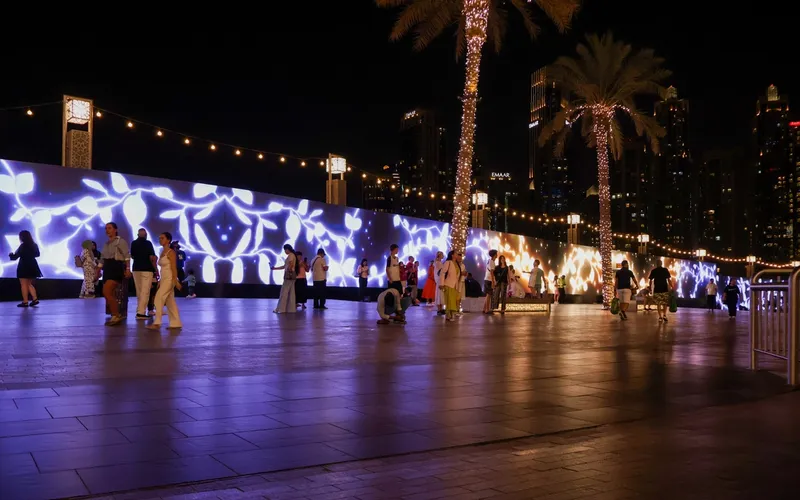
May 22, 2026
FESPA – How the Middle East is redefining digital signage innovation
Back in March we were featured in FESPA’s blog, with our Strategy Director Nita Odedra sharing her perspective on why the Middle East has become a global centre for digital signage innovation. The article explores how ambitious national development plans, major investment in technology across all aspects of daily life, and a willingness to experiment are pushing signage beyond traditional displays into innovative, creative territory. Across the region, digital and static signage are becoming part of wider connected experiences in everyday environments. Screens, AV, AI and interactive technologies integrated into malls, schools, and government buildings are helping create more useful and enjoyable experiences for the people using these spaces. Digital signage is a key part of a wider technological ecosystem that responds to how people move through and engage with a space, creating opportunities for immersive storytelling, intuitive wayfinding and more useful, emotion-driven content. Nita was also featured as a panellist at the FESPA Conference 2026, joining Colin Sinclair McDermott, Founder of OnlinePrintCoach, to discuss what the rest of the world can learn from the Middle East’s innovations. Their conversation explored how signage is moving from passive communication towards interactive architecture and connected experiences, with AI and strategic AV helping drive that shift. Read the full article on FESPA: https://www.fespa.com/en/news-media/how-the-middle-east-is-revolutionising-the-future-of-digital-signage/
Read Article
April 27, 2026
Blue Rhine Industries featured in Campaign Middle East
Our Strategy Director Nita Odedra recently joined Enda McShane, Founder and CEO of SMG Worldwide and SYNQ-X, to explore how UAE destinations can build stronger relationships with the people who use them every day: residents. Published in Campaign Middle East, their article defines how existing data and digital infrastructure can be used more effectively to improve real-world experiences for residents and visitors alike. Recent regional developments have shown what happens when demand changes quickly, especially when it comes to external business and tourist confidence. The UAE businesses continuing to perform are the ones building and enjoying close relationships with the people already here. Many UAE destinations already have the technology and data they need. The opportunity now is to connect those systems and use them to make places easier to navigate, more relevant, and more valuable for the people using them. Read the full article on Campaign Middle East: https://campaignme.com/from-footfall-to-familiarity-uae-resident-relationships-powered-by-actionable-data/
Read Article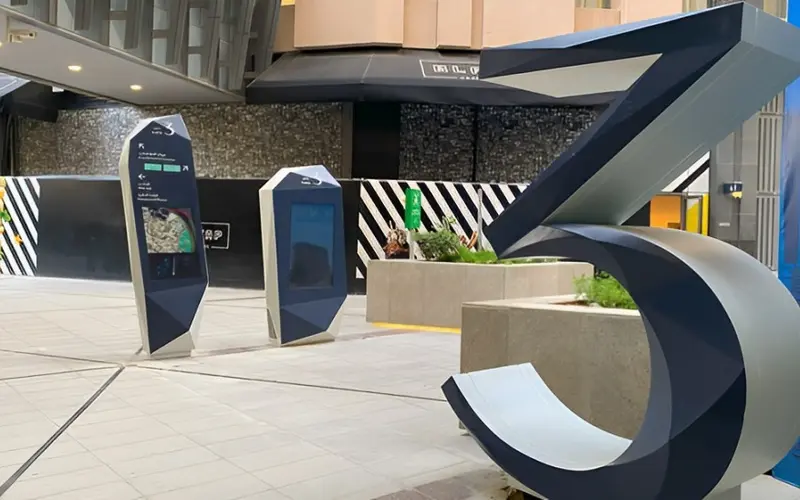
April 8, 2026
Wayfinding as an emerging ecosystem of KSA’s megacities
Featured in the latest issue of Middle East Consultant, our Director John V Joseph explores how wayfinding signage can no longer rely on static signage and physical infrastructure alone. In this deep dive article into Saudi Arabia's future cities, he discusses how AI-powered smart navigation is connecting signage, digital screens, and mobile devices to shape more intuitive, responsive experiences across all types of environments and industries. John argues how wayfinding signage needs to evolve into smart navigation, aligning with the mental maps people use to move through a space. Read the full article on pages 96–100 of Middle East Consultant’s January/February 2026 edition.
Read Article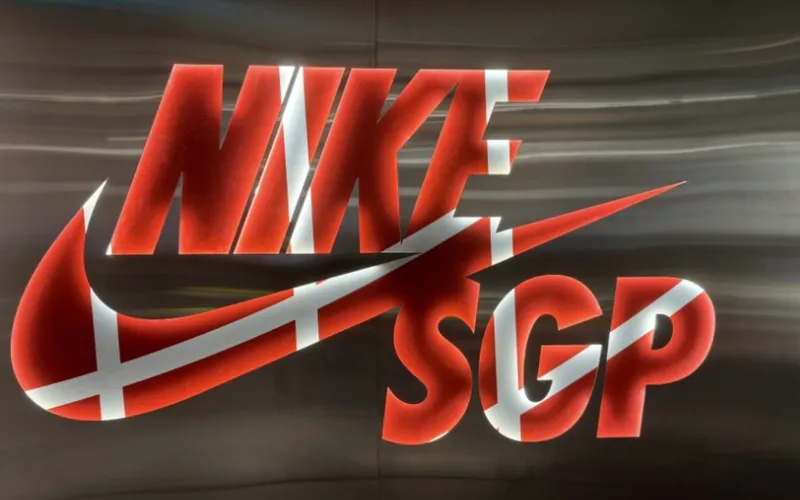
December 4, 2025
20-Day Challenge: Launching Nike’s Multi-Tech Store Amidst 300,000 Daily Visitors
Background Jewel Changi Airport is one of Asia’s premier retail destinations, attracting over 80 million visitors in 2024, averaging 300,000 daily. The SGD 1.7 billion complex features the world’s tallest indoor waterfall, Asia’s largest five-story indoor garden and more than 260 retail and dining outlets. For Nike, establishing a flagship store in this landmark location underscored its commitment to global retail innovation. For Blue Rhine Industries, the project offered a platform to demonstrate technical expertise on a global stage where execution quality shapes brand perception among millions of visitors each year. Beyond scale, Jewel operates as an innovation hub where brands pilot new concepts prior to regional rollout. Success at this venue often informs broader market strategies. Nike’s decision to partner with Blue Rhine Industries reflected trust in our capability to meet exacting international standards. Business Challenge Delivering this project within 20 days in one of the world’s busiest retail environments required precise planning, parallel workflows, and tightly controlled stakeholder alignment. The work took place amid 300,000 daily visitors with no margin for operational disruption. The team coordinated multiple global and regional stakeholders within strict regulatory constraints. Three display technologies had to be integrated across power, data, and structure, each with its own tolerances and calibration demands, while meeting aviation and structural safety standards that significantly raised the complexity bar. Project Scope Multi-technology display network: 11 installations using Samsung LCDs (5 QM65C, 1 QM85C), Leyard curved LED pillar wraps (4 units), and a large Leyard COB LED backwall (1 unit). Custom engineering and integration: All displays feature high-brightness, 24/7 operation, and tailored mounting for seamless integration into Nike’s flagship environment. Architectural adaptation: Curved LED pillars wrap around circular columns with 360-degree viewing, while the staircase LED wall covers 18.2 sqm with precise pixel pitch and structural support. Infrastructure and management: Networked Intel NUC i7 media players, Ryarc CMS for content control, and engineered mounting solutions for all hardware. Certified safety and compliance: PE-certified structural engineering, comprehensive power/data integration, and custom brackets for secure, long-term performance. Our Solution Design and engineering The team converted Nike’s global design intent into fully engineered solutions using detailed 2D and 3D models for each installation. Structural loads, mounting methods, power distribution, and tolerances were fixed before site work, with custom aluminum frames for the curved LEDs matched to column radii within 2mm to avoid visible gaps or banding. The staircase LED wall was validated through structural analysis to confirm the existing building could safely support the load in a high-traffic zone. All critical elements received professional engineering approval before fabrication, keeping design risk out of the 20-day installation window. Fabrication and pre-build validation Hardware was manufactured to final approved drawings rather than adjusted on site, cutting rework and installation time. Custom brackets and frames were load-tested above operating thresholds, and the Nike Swoosh finish was checked for consistent reflection across its full span. Curved LED structures were fully pre-assembled and dry-fitted with live modules in the factory, then shipped as a proven kit of parts. On site, the team focused on installation, not trial-and-error in a live airport environment. Installation and integration Three specialist crews worked in parallel under a single programme, allowing LCD, LED, and illuminated signage to be installed concurrently without interrupting store trading or mall operations. Precision jigs and laser measurement kept curved LED modules perfectly aligned so each column read as a continuous digital surface. The staircase LED wall was installed using modular scaffolding and controlled access to maintain public safety and airport compliance while meeting the 20-day schedule. Media players and the CMS were pre-configured off-site, enabling rapid network connection and content deployment once hardware was powered. Results & ROI Schedule performance The project was completed within the 20-day installation window with no overruns. Early completion of the LCD zones allowed Nike to start content loading 48 hours before launch while surrounding retail operations continued without disruption. Technical performance All 11 displays passed first-time commissioning with no system failures during the initial 30-day period. Color calibration achieved Delta E <2 across the network, with 99.9% pixel performance on LED surfaces and uninterrupted CMS uptime. Business outcomes Nike gained a flagship environment that handles daily visitor volumes comparable to many stores’ monthly footfall. The curved LEDs became signature visual moments that generated organic social content, while the staircase LED turned a movement corridor into an engagement zone that increased dwell time. For GMG Sports, the rollout created a repeatable model for future Nike flagships in Southeast Asia and strengthened confidence in delivering complex retail technology at scale. Strategic Value Blue Rhine Industries delivered a benchmark-setting project for Nike at Jewel Changi Airport, proving our ability to execute complex, multi-technology environments in the world’s most demanding retail locations. This project was not just about technical delivery; it was about turning a high-traffic landmark into a brand-defining experience, with every pixel and structural detail engineered for impact. Our in-house expertise across LCD, LED, and illuminated signage, combined with end-to-end engineering and fabrication, enables seamless integration of diverse technologies, eliminating the delays and compromises typical in multi-vendor projects.
Read Article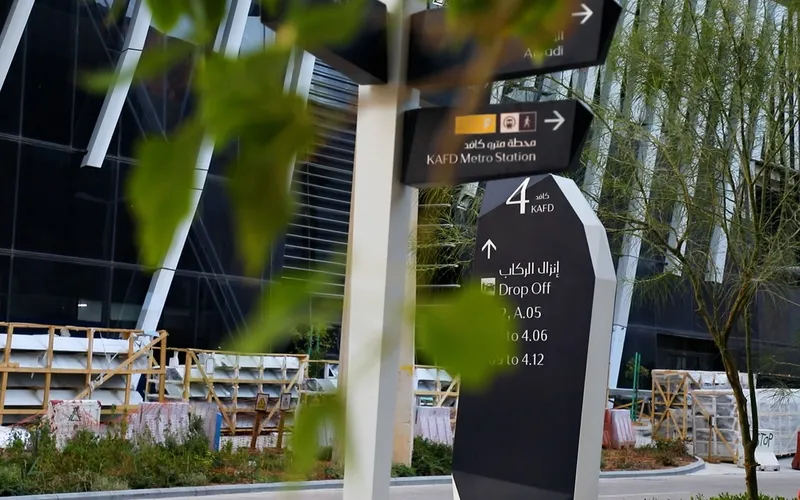
July 24, 2025
KAFD: Mega-Signage Network Takes Centre Stage (15,500+ Signs & 355 Screens)
A New Standard for Intuitive Wayfinding Imagine navigating a bustling cityscape within a city – 1.6 million square meters of towering skyscrapers and intricate infrastructure. This is the domain of the King Abdullah Financial District (KAFD), a premier financial hub in Saudi Arabia. Here, seamless navigation is paramount, and that’s where KAFD’s intuitive wayfinding and smart signage solution comes in. The Challenge A Labyrinth of Opportunity KAFD’s sheer size and complexity posed a significant challenge. With 95 mixed-use buildings, a diverse user base – residents, visitors, and professionals – and a constant flow of foot traffic, traditional wayfinding simply wouldn’t suffice. KAFD needed a system that could handle: Scale: Efficiently managing navigation across multiple levels of a sprawling public realm. Volume: Accommodating a large user base with diverse needs, ensuring everyone finds their way effortlessly. Sophistication: Upholding KAFD’s reputation as a leading financial district with a technologically advanced and user-friendly experience. The Vision Beyond Maps: A Symphony of Smart Technology KAFD’s vision wasn’t just about getting from point A to point B. They envisioned a personalized and interactive journey. This is where cutting-edge technology steps in: Facial Recognition Cameras: This system recognizes you and personalizes directions based on your needs, making navigation a breeze. Smart Sensors: These act like digital eyes, constantly monitoring traffic flow and how people move. The system uses this real-time data to adjust directions, avoiding congested areas and keeping things efficient. Digital Interactive Screens: Forget static signs. KAFD boasts a network of 355 digital displays showing real-time updates, personalized directions, and even interactive features – all at your fingertips. Our Solution A Seamlessly Connected KAFD: The Future is Now We delivered a comprehensive signage and wayfinding system featuring 15,500 signs and 355 vibrant display screens. This system seamlessly navigates visitors throughout the entire multi-level district and functions as a dynamic information hub. The implementation encompassed several key components: 1. Static Wayfinding Signs: Strategically placed throughout the district to ensure clear and consistent guidance. 2. Advanced Hardware Systems: Designed to support the functionality and durability of the signage. 3 Robust Software System: Developed to manage content and ensure real-time updates, integrated with a seamless content management system (in association with RYARC) to handle extensive wayfinding information. 4. Outdoor Digital Interactive Screens: Installation of 355 high-performance screens equipped with outdoor media players, offering dynamic and personalized wayfinding solutions capable of withstanding summer temperatures of 50°C. 5. Hyper-Personalized Navigation: Utilizing advanced technology to provide navigation assistance based on user preferences and needs, including digital kiosks with facial recognition cameras to enhance personalization and security. 6. Smart Sensors and Interactive Maps: Smart sensors were incorporated to improve interactivity and responsiveness, and interactive maps enabled users to navigate the district and access detailed information about facilities and services. Collaborative Design and Execution In collaboration with design consultants (Endpoint), the final design met the district’s requirements and involved the fabrication and final design (Issued for Construction – IFC) of the signage system. Key features included: Outdoor Kiosks: Equipped with interactive screens and smart technology to assist users on the go. 3D Geometric Shape Creation: Addressed a unique design challenge using FRP (Fiber Reinforced Polymer) molds, showcasing innovation and precision. Meticulous Installation Schedule: Developed to minimize onsite storage impact and reduce disruption in live areas, ensuring a low impact on daily operations within KAFD. Stakeholder Coordination: Managed a complex network of stakeholders, including various contractors, to ensure smooth coordination and clear communication throughout the project. Dedicated On-Site Team A full-time, dedicated on-site team comprising Health, Safety, and Environmental (HSE) specialists, Project Managers, Engineers, Quality Control, and Administrative staff provided continuous project oversight. As the main contractor, our responsibilities included: Comprehensive Project Delivery: From planning and execution to final handover, ensuring compliance with health, safety, and environmental regulations. Government Approvals and Permits: Managed the process of obtaining necessary approvals and permits. With over 250 team members working on this project from start to finish, we successfully delivered a comprehensive wayfinding and smart signage solution. This project significantly enhanced navigation and user experience within the King Abdullah Financial District, aligning with its vision of becoming a leading financial and business hub. The advanced wayfinding system not only improved accessibility but also integrated modern technology and innovative design. Impact Increased Foot Traffic and Business Improved Operational Efficiency, Reduced Navigation Time and Frustration Increased Accessibility Personalized Wayfinding Real-time Information
Read Article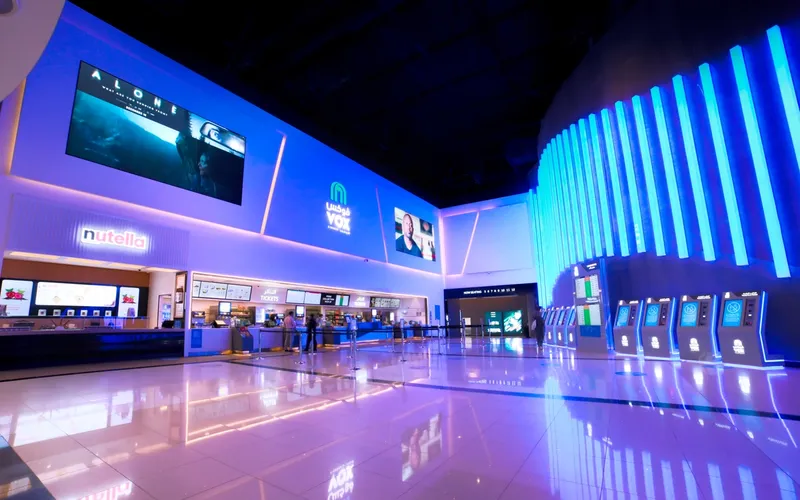
March 17, 2024
Blue Rhine Industries sets the bar high for upcoming cinemas in KSA
Saudi Arabia’s ambitious Vision 2030 is creating a wave of exciting opportunities, and the entertainment industry is experiencing a long-awaited renaissance. Following the historic lifting of the 35-year ban on cinemas, Blue Rhine Industries has emerged as a key player, partnering with leading names like VOX Cinemas and Empire Cinemas. Fulfilling Pent-Up Demand with Rapid Cinema Development With the ban lifted, the demand for high-quality cinemas in KSA has soared. Blue Rhine Industries has answered this call with impressive speed, completing an impressive seven projects in just one year. This rapid development showcases our expertise and unwavering commitment to delivering exceptional solutions. Setting the Standard for Entertainment Experiences: A Trusted Partner VOX Cinemas, a regional entertainment leader, has set ambitious goals to elevate the global cinema experience. Blue Rhine Industries is proud to be their trusted partner, providing cutting-edge digital displays, signage, and payment kiosks across the Middle East. Our proven track record with industry giants like VOX, REEL Cinemas, NOVO Cinemas, and KNCC Cinescape ensures exceptional quality for every project. Our partnership with VOX Cinemas in KSA is all about delivering an unforgettable cinema experience for moviegoers. We’re committed to making up for lost time and creating destinations that spark joy and excitement. As Blue Rhine Operations Manager, Mr. Thomas Thomas, aptly highlights, “Since the ban has been lifted in KSA, the signage industry has become increasingly competitive. This surge in cinema projects has fueled a demand for high-quality digital signage providers.” Blue Rhine is at the forefront of this exciting growth, ensuring top-notch signage solutions. Leading the Way in KSA’s Entertainment Future: A Deep Commitment Our journey began with the successful completion of VOX Cinemas at Riyadh Park Mall, followed closely by the Red Sea Mall location in Jeddah. Most recently, we’ve installed lightboxes, entrance signs, and digital displays at VOX Cinemas, Al Qasr, Riyadh. Blue Rhine Industries is deeply committed to shaping the future of KSA’s entertainment industry. Despite the 35-year gap, moviegoers will soon be enjoying cinemas that rival the best in the Middle East.
Read Article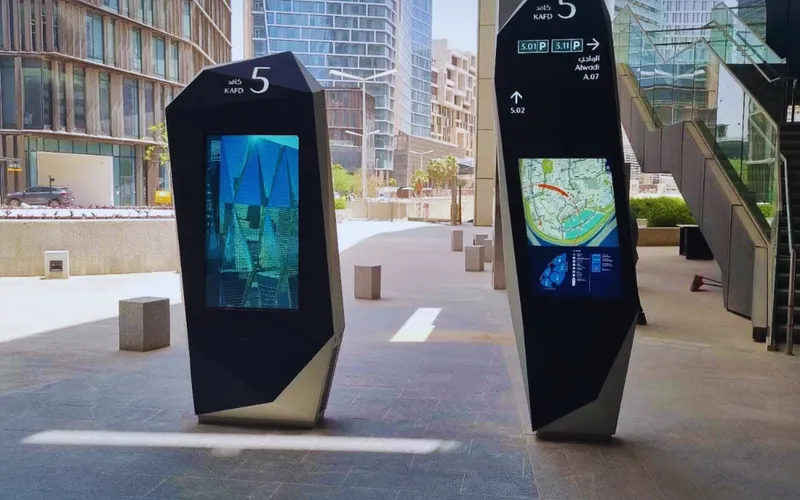
March 14, 2024
Cut the Cord, Not the Content: Cloud-Based Signage
Still grappling with outdated signage systems that drain your budget? It’s time to ditch the cable bills, the bulky hardware headaches, and the endless loop of troubleshooting. Cloud-based signage is here to level up your displays. It’s the ultimate content chameleon, morphing to your needs with ease. Forget static posters and clunky presentations – with cloud signage, you can unleash dynamic, engaging content that captivates your audience. From scheduling updates on the fly to managing displays remotely, cloud technology empowers you to cut the cord, not the content. Stay tuned as we delve into the world of cloud-based signage, exploring its benefits, features, and how it can transform your communication strategy. Compared to traditional on-premise digital signage, cloud-based systems offer a number of advantages that can make them a more attractive option for businesses of all sizes. Here’s a closer look at some of the key benefits of cloud signage: Cloud-based signage is highly scalable. You can easily add or remove displays from your network as needed, without any major investments in hardware or infrastructure. This makes it ideal for businesses that are constantly growing or expanding into new locations. Cloud signage eliminates the need for expensive upfront costs associated with purchasing and maintaining physical servers. The subscription-based model allows for predictable budgeting and eliminates the burden of IT staff for maintenance. Cloud signage systems offer a centralized platform for managing all your digital signage content. You can update and schedule content for any screen in your network from a single, web-based dashboard, regardless of your physical location. This makes it easy to keep your messaging fresh and relevant. With cloud signage, you can make changes to your content and have them reflected on all your displays immediately. This is ideal for situations where you need to disseminate urgent information or update promotions on the fly. Cloud-based signage systems often come with built-in analytics that allow you to track how your content is performing. You can see how many people are viewing your displays, what content is most engaging, and make adjustments to your campaigns accordingly. Cloud providers typically offer robust security measures to protect your data. Additionally, cloud-based systems are less susceptible to hardware failures that can take down on-premise systems. Cloud signage allows you to grant access to different users with varying levels of permission. This makes it easy for teams to collaborate on content creation and management. Cloud-based signage platforms can often integrate with other business systems, such as CRM or inventory management software. This allows you to create dynamic content that automatically updates based on real-time data. A clothing retailer with hundreds of stores can update promotions and showcase new arrivals across their entire network simultaneously. Imagine the impact of a coordinated Black Friday sale with real-time inventory displayed on each store’s signage. Cloud-based solutions make this a reality, ensuring brand consistency and maximizing campaign effectiveness. Cloud-based signage allows restaurants to display dynamic content that keeps customers engaged. Imagine displaying real-time wait times for each table or highlighting happy hour specials as the clock strikes. This not only enhances the customer experience but also encourages strategic ordering and upselling. Universities can effortlessly update class schedules, announcements, and inspirational content across campus with just a few clicks. Imagine welcoming new students with personalized messages displayed on digital signage throughout dorms or showcasing upcoming events to generate excitement. Hospitals can leverage cloud-based signage to share wait times, public health information, and even doctor bios with patients. This not only improves transparency but also helps reduce patient anxiety and promotes trust in the healthcare facility. While cloud-based signage eliminates the upfront costs of hardware and software, the benefits extend far beyond simple cost savings. The ability to manage content remotely, schedule updates with ease, and integrate real-time data feeds empowers businesses to create a more dynamic and engaging customer experience. Studies by [insert source] have shown that digital signage can increase brand recall by up to 83%, highlighting the potential return on investment. In conclusion, transitioning to cloud-based signage allows businesses to maintain rich, dynamic content while cutting the physical and financial cords associated with traditional systems. This modern approach provides unparalleled flexibility, enabling real-time updates and seamless integration across multiple locations. By leveraging cloud technology, businesses can enhance their marketing strategies, improve customer engagement, and streamline operations without the limitations of hardware dependencies.
Read Article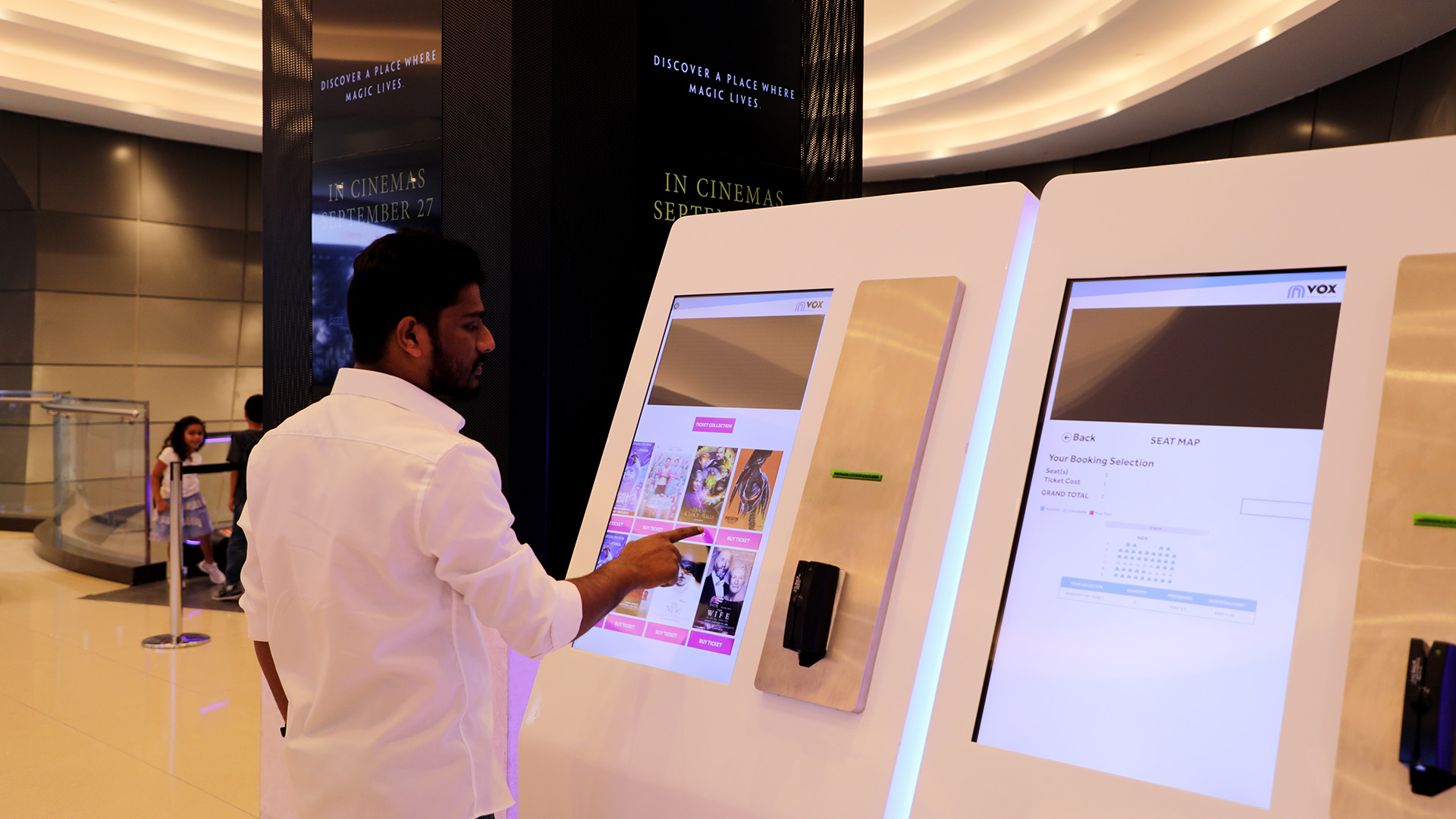
March 17, 2024
Blue Rhine Industries sets the bar high for upcoming cinemas in KSA
Saudi Arabia’s ambitious Vision 2030 is creating a wave of exciting opportunities, and the entertainment industry is experiencing a long-awaited renaissance. Following the historic lifting of the 3...
Read Article
March 11, 2024
All You Need to Know About Transparent Digital Technology
For decades, science fiction movies have tantalized us with visions of holographic displays and windows that transform into vibrant screens. Well, the future is now, and transparent display technol...
Read Article