

News & Insights
You heard it here first. Stay up-to-date on game-changing insights in pro AV, wayfinding, and digital and static signage. Plus, discover the latest news and announcements from Blue Rhine Industries.
May 22, 2026
FESPA – How the Middle East is redefining digital signage innovation
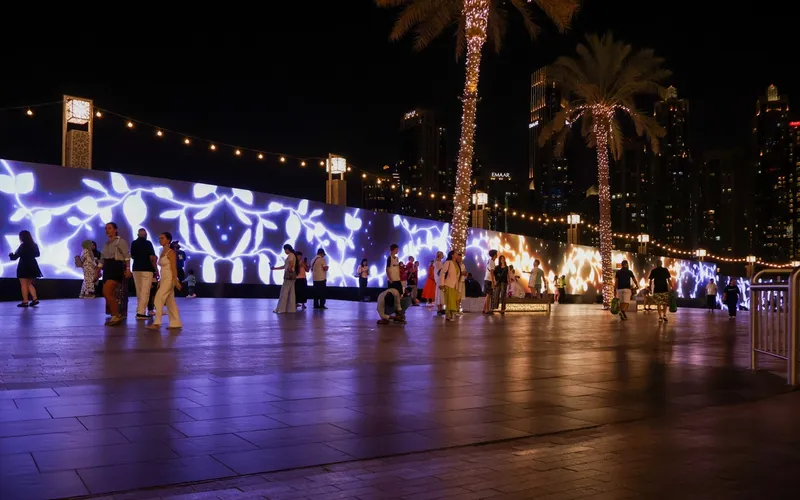
Back in March we were featured in FESPA’s blog, with our Strategy Director Nita Odedra sharing her perspective on why the Middle East has become a global centre for digital signage innovation. The article explores how ambitious national development plans, major investment in technology across all aspects of daily life, and a willingness to experiment are pushing signage beyond traditional displays into innovative, creative territory. Across the region, digital and static signage are becoming part of wider connected experiences in everyday environments. Screens, AV, AI and interactive technologies integrated into malls, schools, and government buildings are helping create more useful and enjoyable experiences for the people using these spaces. Digital signage is a key part of a wider technological ecosystem that responds to how people move through and engage with a space, creating opportunities for immersive storytelling, intuitive wayfinding and more useful, emotion-driven content. Nita was also featured as a panellist at the FESPA Conference 2026, joining Colin Sinclair McDermott, Founder of OnlinePrintCoach, to discuss what the rest of the world can learn from the Middle East’s innovations. Their conversation explored how signage is moving from passive communication towards interactive architecture and connected experiences, with AI and strategic AV helping drive that shift. Read the full article on FESPA: https://www.fespa.com/en/news-media/how-the-middle-east-is-revolutionising-the-future-of-digital-signage/
Read Article
April 27, 2026
Blue Rhine Industries featured in Campaign Middle East
Our Strategy Director Nita Odedra recently joined Enda McShane, Founder and CEO of SMG Worldwide and SYNQ-X, to explore how UAE destinations can build stronger relationships with the people who use them every day: residents. Published in Campaign Middle East, their article defines how existing data and digital infrastructure can be used more effectively to improve real-world experiences for residents and visitors alike. Recent regional developments have shown what happens when demand changes quickly, especially when it comes to external business and tourist confidence. The UAE businesses continuing to perform are the ones building and enjoying close relationships with the people already here. Many UAE destinations already have the technology and data they need. The opportunity now is to connect those systems and use them to make places easier to navigate, more relevant, and more valuable for the people using them. Read the full article on Campaign Middle East: https://campaignme.com/from-footfall-to-familiarity-uae-resident-relationships-powered-by-actionable-data/
Read Article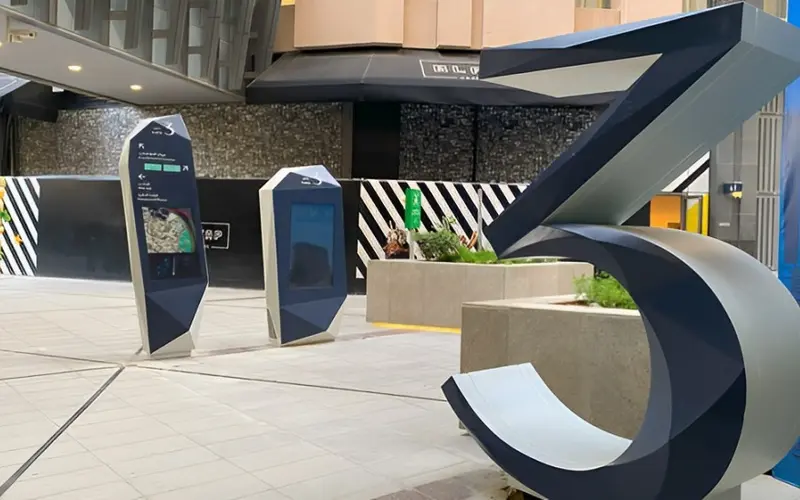
April 8, 2026
Wayfinding as an emerging ecosystem of KSA’s megacities
Featured in the latest issue of Middle East Consultant, our Director John V Joseph explores how wayfinding signage can no longer rely on static signage and physical infrastructure alone. In this deep dive article into Saudi Arabia's future cities, he discusses how AI-powered smart navigation is connecting signage, digital screens, and mobile devices to shape more intuitive, responsive experiences across all types of environments and industries. John argues how wayfinding signage needs to evolve into smart navigation, aligning with the mental maps people use to move through a space. Read the full article on pages 96–100 of Middle East Consultant’s January/February 2026 edition.
Read Article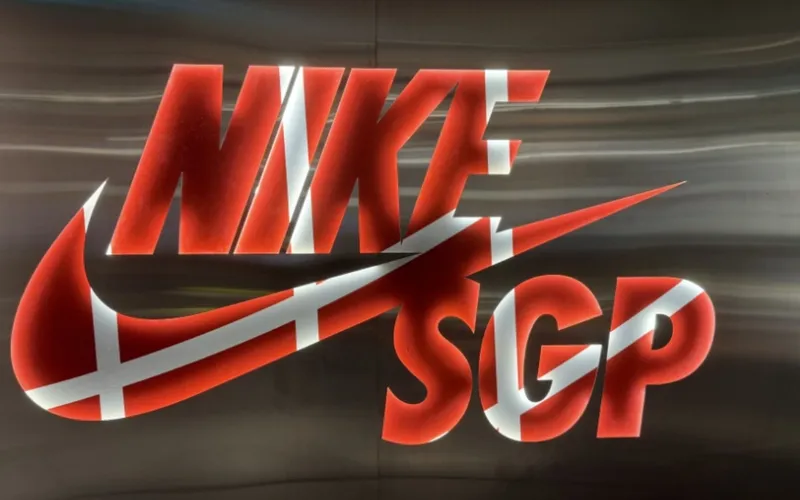
December 4, 2025
20-Day Challenge: Launching Nike’s Multi-Tech Store Amidst 300,000 Daily Visitors
Background Jewel Changi Airport is one of Asia’s premier retail destinations, attracting over 80 million visitors in 2024, averaging 300,000 daily. The SGD 1.7 billion complex features the world’s tallest indoor waterfall, Asia’s largest five-story indoor garden and more than 260 retail and dining outlets. For Nike, establishing a flagship store in this landmark location underscored its commitment to global retail innovation. For Blue Rhine Industries, the project offered a platform to demonstrate technical expertise on a global stage where execution quality shapes brand perception among millions of visitors each year. Beyond scale, Jewel operates as an innovation hub where brands pilot new concepts prior to regional rollout. Success at this venue often informs broader market strategies. Nike’s decision to partner with Blue Rhine Industries reflected trust in our capability to meet exacting international standards. Business Challenge Delivering this project within 20 days in one of the world’s busiest retail environments required precise planning, parallel workflows, and tightly controlled stakeholder alignment. The work took place amid 300,000 daily visitors with no margin for operational disruption. The team coordinated multiple global and regional stakeholders within strict regulatory constraints. Three display technologies had to be integrated across power, data, and structure, each with its own tolerances and calibration demands, while meeting aviation and structural safety standards that significantly raised the complexity bar. Project Scope Multi-technology display network: 11 installations using Samsung LCDs (5 QM65C, 1 QM85C), Leyard curved LED pillar wraps (4 units), and a large Leyard COB LED backwall (1 unit). Custom engineering and integration: All displays feature high-brightness, 24/7 operation, and tailored mounting for seamless integration into Nike’s flagship environment. Architectural adaptation: Curved LED pillars wrap around circular columns with 360-degree viewing, while the staircase LED wall covers 18.2 sqm with precise pixel pitch and structural support. Infrastructure and management: Networked Intel NUC i7 media players, Ryarc CMS for content control, and engineered mounting solutions for all hardware. Certified safety and compliance: PE-certified structural engineering, comprehensive power/data integration, and custom brackets for secure, long-term performance. Our Solution Design and engineering The team converted Nike’s global design intent into fully engineered solutions using detailed 2D and 3D models for each installation. Structural loads, mounting methods, power distribution, and tolerances were fixed before site work, with custom aluminum frames for the curved LEDs matched to column radii within 2mm to avoid visible gaps or banding. The staircase LED wall was validated through structural analysis to confirm the existing building could safely support the load in a high-traffic zone. All critical elements received professional engineering approval before fabrication, keeping design risk out of the 20-day installation window. Fabrication and pre-build validation Hardware was manufactured to final approved drawings rather than adjusted on site, cutting rework and installation time. Custom brackets and frames were load-tested above operating thresholds, and the Nike Swoosh finish was checked for consistent reflection across its full span. Curved LED structures were fully pre-assembled and dry-fitted with live modules in the factory, then shipped as a proven kit of parts. On site, the team focused on installation, not trial-and-error in a live airport environment. Installation and integration Three specialist crews worked in parallel under a single programme, allowing LCD, LED, and illuminated signage to be installed concurrently without interrupting store trading or mall operations. Precision jigs and laser measurement kept curved LED modules perfectly aligned so each column read as a continuous digital surface. The staircase LED wall was installed using modular scaffolding and controlled access to maintain public safety and airport compliance while meeting the 20-day schedule. Media players and the CMS were pre-configured off-site, enabling rapid network connection and content deployment once hardware was powered. Results & ROI Schedule performance The project was completed within the 20-day installation window with no overruns. Early completion of the LCD zones allowed Nike to start content loading 48 hours before launch while surrounding retail operations continued without disruption. Technical performance All 11 displays passed first-time commissioning with no system failures during the initial 30-day period. Color calibration achieved Delta E <2 across the network, with 99.9% pixel performance on LED surfaces and uninterrupted CMS uptime. Business outcomes Nike gained a flagship environment that handles daily visitor volumes comparable to many stores’ monthly footfall. The curved LEDs became signature visual moments that generated organic social content, while the staircase LED turned a movement corridor into an engagement zone that increased dwell time. For GMG Sports, the rollout created a repeatable model for future Nike flagships in Southeast Asia and strengthened confidence in delivering complex retail technology at scale. Strategic Value Blue Rhine Industries delivered a benchmark-setting project for Nike at Jewel Changi Airport, proving our ability to execute complex, multi-technology environments in the world’s most demanding retail locations. This project was not just about technical delivery; it was about turning a high-traffic landmark into a brand-defining experience, with every pixel and structural detail engineered for impact. Our in-house expertise across LCD, LED, and illuminated signage, combined with end-to-end engineering and fabrication, enables seamless integration of diverse technologies, eliminating the delays and compromises typical in multi-vendor projects.
Read Article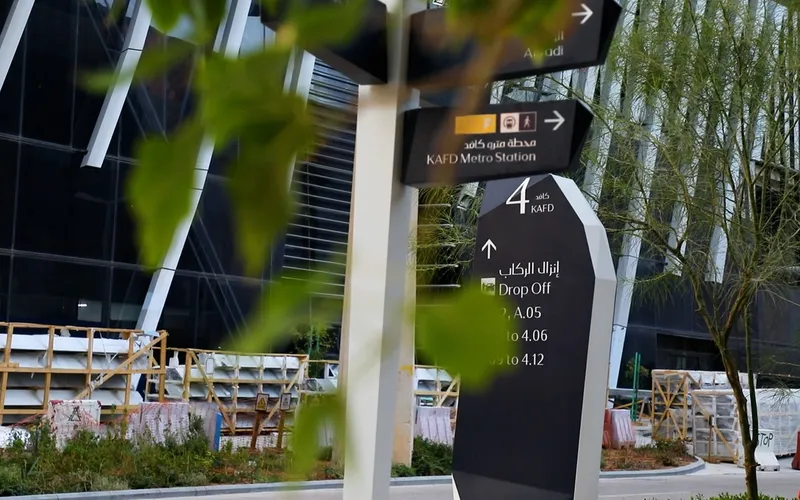
July 24, 2025
KAFD: Mega-Signage Network Takes Centre Stage (15,500+ Signs & 355 Screens)
A New Standard for Intuitive Wayfinding Imagine navigating a bustling cityscape within a city – 1.6 million square meters of towering skyscrapers and intricate infrastructure. This is the domain of the King Abdullah Financial District (KAFD), a premier financial hub in Saudi Arabia. Here, seamless navigation is paramount, and that’s where KAFD’s intuitive wayfinding and smart signage solution comes in. The Challenge A Labyrinth of Opportunity KAFD’s sheer size and complexity posed a significant challenge. With 95 mixed-use buildings, a diverse user base – residents, visitors, and professionals – and a constant flow of foot traffic, traditional wayfinding simply wouldn’t suffice. KAFD needed a system that could handle: Scale: Efficiently managing navigation across multiple levels of a sprawling public realm. Volume: Accommodating a large user base with diverse needs, ensuring everyone finds their way effortlessly. Sophistication: Upholding KAFD’s reputation as a leading financial district with a technologically advanced and user-friendly experience. The Vision Beyond Maps: A Symphony of Smart Technology KAFD’s vision wasn’t just about getting from point A to point B. They envisioned a personalized and interactive journey. This is where cutting-edge technology steps in: Facial Recognition Cameras: This system recognizes you and personalizes directions based on your needs, making navigation a breeze. Smart Sensors: These act like digital eyes, constantly monitoring traffic flow and how people move. The system uses this real-time data to adjust directions, avoiding congested areas and keeping things efficient. Digital Interactive Screens: Forget static signs. KAFD boasts a network of 355 digital displays showing real-time updates, personalized directions, and even interactive features – all at your fingertips. Our Solution A Seamlessly Connected KAFD: The Future is Now We delivered a comprehensive signage and wayfinding system featuring 15,500 signs and 355 vibrant display screens. This system seamlessly navigates visitors throughout the entire multi-level district and functions as a dynamic information hub. The implementation encompassed several key components: 1. Static Wayfinding Signs: Strategically placed throughout the district to ensure clear and consistent guidance. 2. Advanced Hardware Systems: Designed to support the functionality and durability of the signage. 3 Robust Software System: Developed to manage content and ensure real-time updates, integrated with a seamless content management system (in association with RYARC) to handle extensive wayfinding information. 4. Outdoor Digital Interactive Screens: Installation of 355 high-performance screens equipped with outdoor media players, offering dynamic and personalized wayfinding solutions capable of withstanding summer temperatures of 50°C. 5. Hyper-Personalized Navigation: Utilizing advanced technology to provide navigation assistance based on user preferences and needs, including digital kiosks with facial recognition cameras to enhance personalization and security. 6. Smart Sensors and Interactive Maps: Smart sensors were incorporated to improve interactivity and responsiveness, and interactive maps enabled users to navigate the district and access detailed information about facilities and services. Collaborative Design and Execution In collaboration with design consultants (Endpoint), the final design met the district’s requirements and involved the fabrication and final design (Issued for Construction – IFC) of the signage system. Key features included: Outdoor Kiosks: Equipped with interactive screens and smart technology to assist users on the go. 3D Geometric Shape Creation: Addressed a unique design challenge using FRP (Fiber Reinforced Polymer) molds, showcasing innovation and precision. Meticulous Installation Schedule: Developed to minimize onsite storage impact and reduce disruption in live areas, ensuring a low impact on daily operations within KAFD. Stakeholder Coordination: Managed a complex network of stakeholders, including various contractors, to ensure smooth coordination and clear communication throughout the project. Dedicated On-Site Team A full-time, dedicated on-site team comprising Health, Safety, and Environmental (HSE) specialists, Project Managers, Engineers, Quality Control, and Administrative staff provided continuous project oversight. As the main contractor, our responsibilities included: Comprehensive Project Delivery: From planning and execution to final handover, ensuring compliance with health, safety, and environmental regulations. Government Approvals and Permits: Managed the process of obtaining necessary approvals and permits. With over 250 team members working on this project from start to finish, we successfully delivered a comprehensive wayfinding and smart signage solution. This project significantly enhanced navigation and user experience within the King Abdullah Financial District, aligning with its vision of becoming a leading financial and business hub. The advanced wayfinding system not only improved accessibility but also integrated modern technology and innovative design. Impact Increased Foot Traffic and Business Improved Operational Efficiency, Reduced Navigation Time and Frustration Increased Accessibility Personalized Wayfinding Real-time Information
Read Article